PallMAB, Palliative Care and Multimodal Analyses of Biomarkers
The History of PallMAB
PallMAB emerged from the integration of two complementary research initiatives that had evolved over several years: PallMeT (Palliative Medicine Technology) and PaBE (Palliative Medicine Biobank Erlangen). Both groups are part of the Department of Palliative Medicine at University Hospital Erlangen, headed by Professor Christoph Ostgathe, and are embedded within the research division led by PD Dr. Dr. Maria Heckel. Both groups, as well as PallMAB, are led by Dr. Tobias Steigleder.
Together, they share the overarching goal of sustainably improving palliative care through data-driven and innovative approaches.
Sensor Technology and Clinical Application – PallMeT
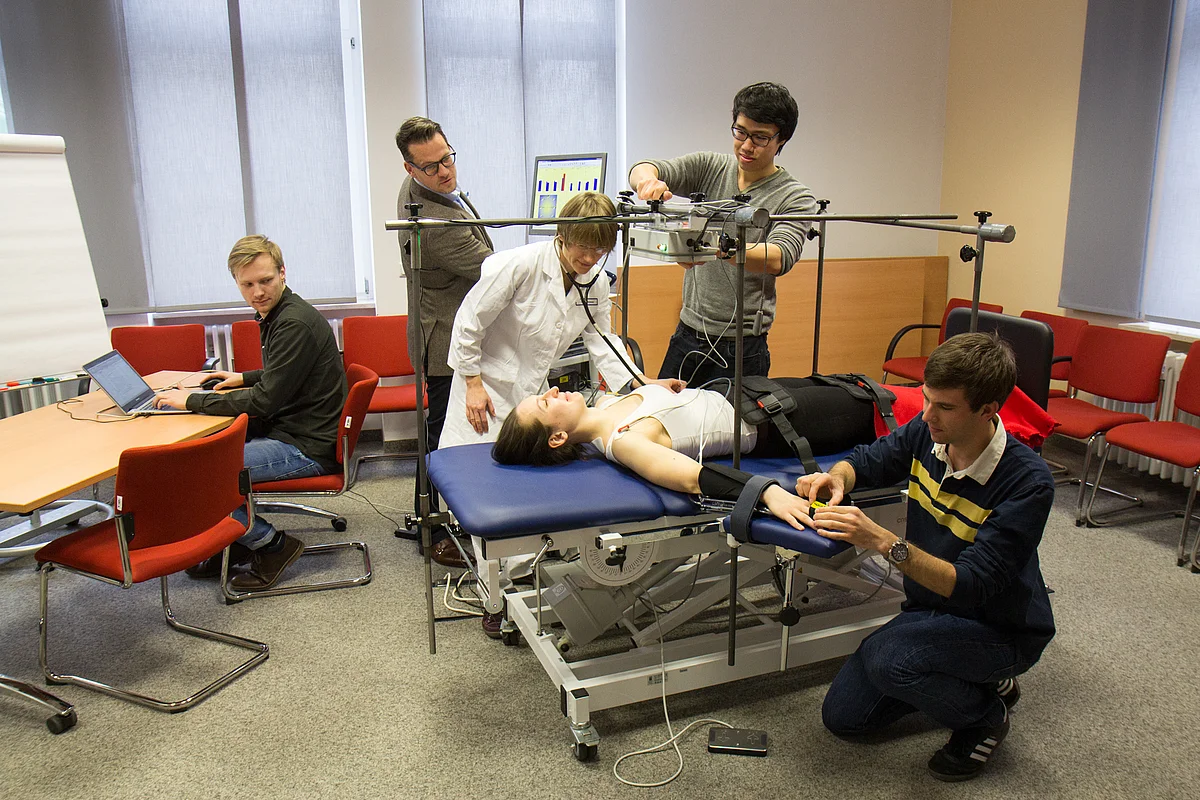
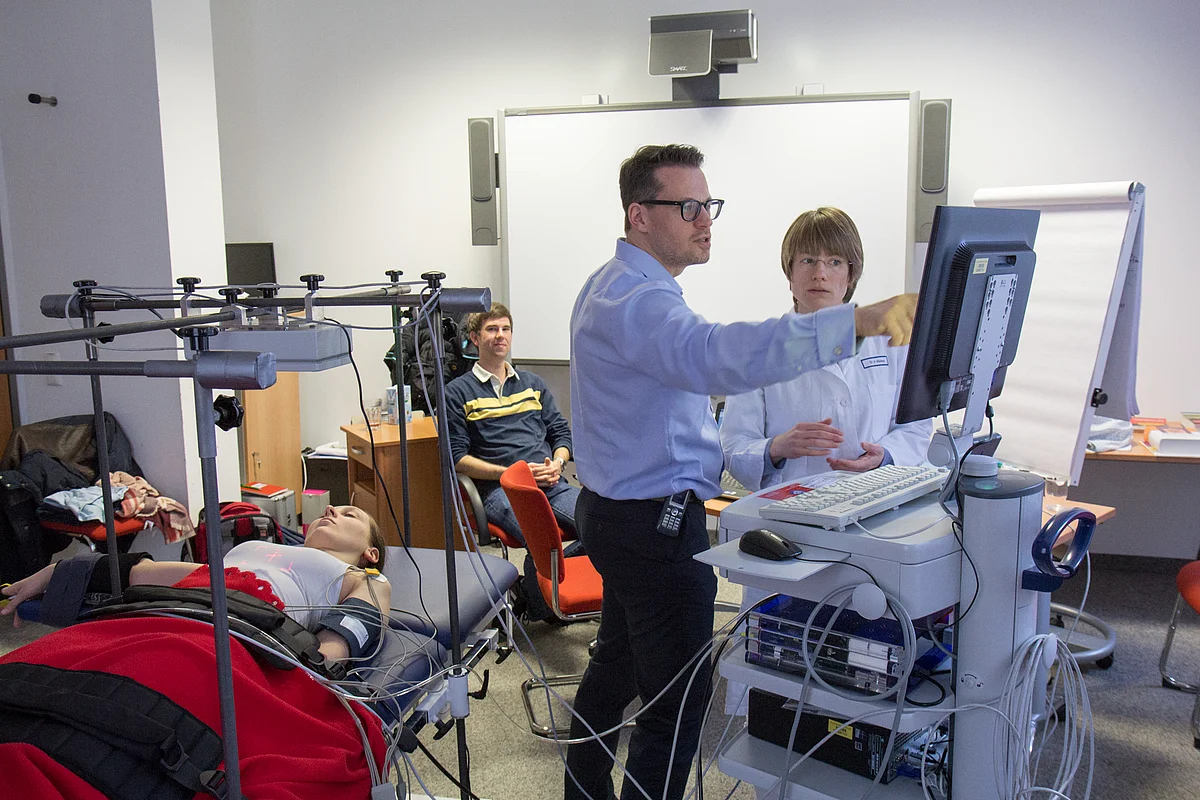
PallMeT originated in 2016 through initial research on contactless radar technology for the assessment of heart rate and respiration, conducted in collaboration with the Chair of Technical Electronics (LTE) at Friedrich-Alexander-Universität Erlangen-Nürnberg (FAU).
This line of research was first expanded to a larger scale through funding from the German Federal Ministry of Education and Research (BMBF) within the GUARDIAN project (grant number 16SV7695). Subsequent projects followed, including BrainEpP (BMBF, grant number 13GW0295) and participation in the Collaborative Research Centre (DFG SFB 1483) EmpkinS.
Over time, the scope of research broadened substantially:
- Development of smart patches within the European EIT Health funding framework
- Investigation of wearables, Internet of Things (IoT) technologies, and integration of clinical data within the BMWK-funded GAIA-X project TEAM-X
- AI-based analysis of clinical data and large language model (LLM)-supported free-text analysis within the bidt-funded project PALLADiUM
These activities were complemented by numerous InnoLab projects, master’s theses, doctoral dissertations, and international collaborations with academic and industrial partners. These include multiple FAU institutes (e.g., LTE, LHFT, AIBE), Hamburg University of Technology (TUHH), Stanford University (The Movement Lab and Primary Care and Population Health), Hull York Medical School (UK), as well as industry partners such as Geratherm Respiratory (Germany) and NVISION (Spain).
PallMeT represents the integration of advanced sensor technologies with innovative data analytics, ranging from probabilistic approaches to biosignal detection to machine learning methods for clinical applications.
Data, Biomaterials, and Clinical Insight – PaBE
The Palliative Medicine Biobank Erlangen (PaBE) was established in 2021 as part of the Central Biobank Erlangen (CeBE). From the outset, its aim was to develop a structured and certified biobank tailored specifically to the needs of palliative care, thereby addressing a previously unmet need in research infrastructure.
Following a successful feasibility study (2022–2023), two major research projects funded by the ALIVIA Foundation were initiated and are currently ongoing:
- PaBE-FIRST: Detection and staging of the cancer cachexia-anorexia syndrome
- PaBE-FIT: Investigation of vitamin B1 deficiency as a cause of delirium in palliative care
PaBE integrates biomaterials with routinely collected clinical data, thereby providing a unique foundation for the application of both classical statistical methods and modern machine learning approaches.
Integration into PallMAB
The integration of PallMeT and PaBE into PallMAB – Palliative Care and Multimodal Analysis of Biomarkers – represents a logical and strategic step, implemented in the first quarter of 2026. Both groups utilize biomarkers of diverse origins and share the common objective of improving the understanding and prediction of clinically relevant outcomes in palliative care.
By integrating high-resolution sensor data, biomaterials, and clinical data, new opportunities arise to capture and model complex relationships. Particular emphasis is placed on predicting symptom burden, disease trajectories, and functional and prognostic parameters such as self-care ability, nutritional status, and survival.
PallMAB thus combines technological innovation, multimodal biomedical analytics, and clinical relevance, with the aim of advancing and improving the care of patients with severe illness through data-driven and patient-centered approaches.
Head of the working group:
Dr. med. Tobias Steigleder tobias.steigleder(at)uk-erlangen.de
Partner PallMAB: